
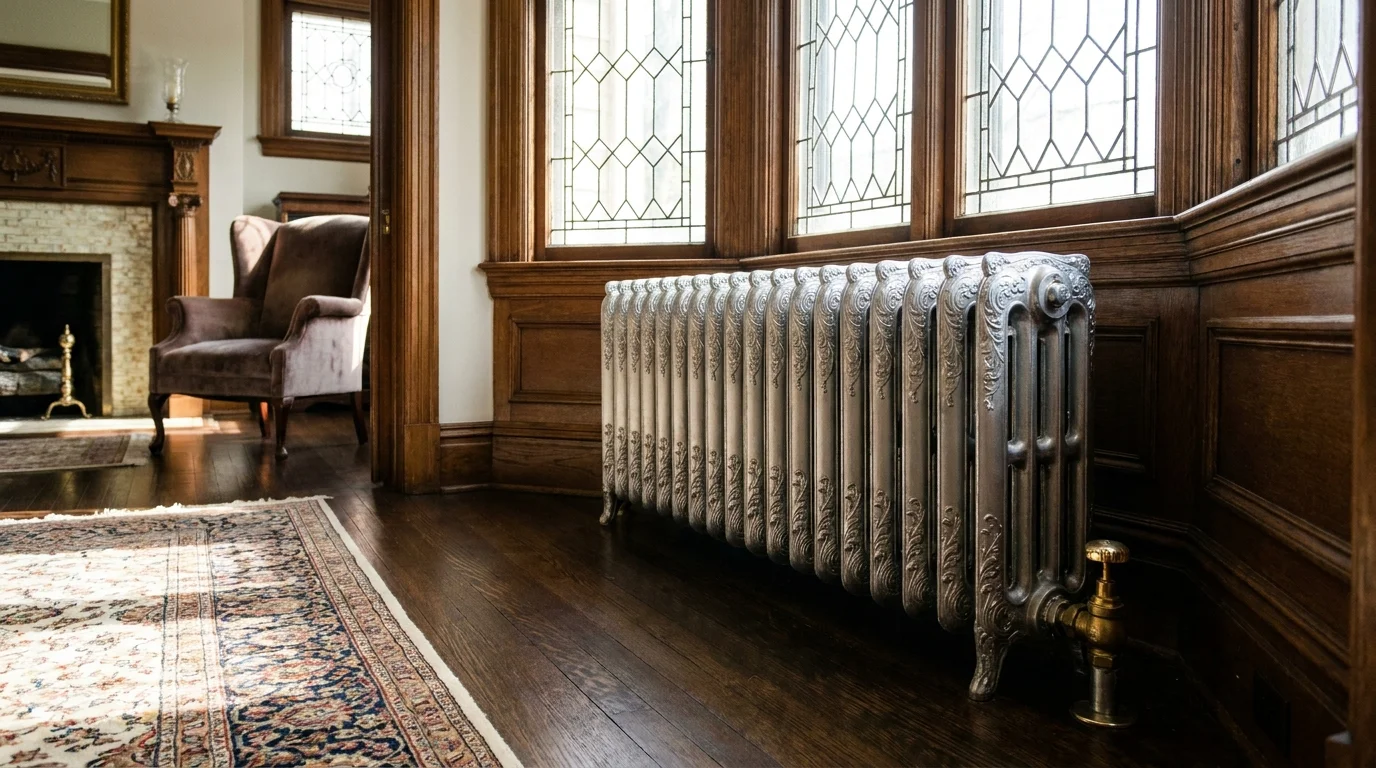
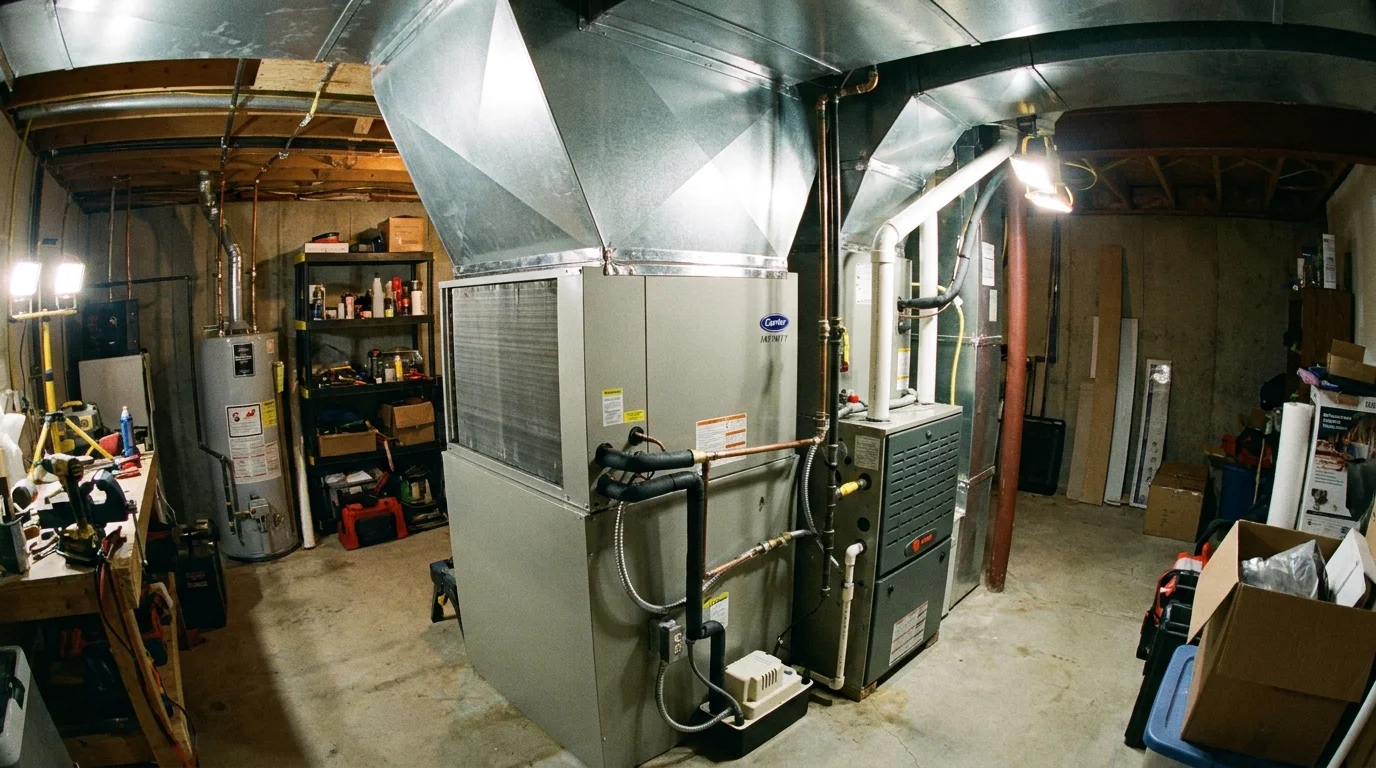
A steam-to-heat-pump project must replace both heat production and distribution. Plan room loads, indoor-unit placement or new ducts, electrical capacity, condensate routes, outdoor-unit locations, and cold-weather backup. Many owners start with ductless heat pumps for cooling and shoulder seasons and keep the boiler as backup.
 Technical Consideration
Why is distribution the hard part?
Radiators carried heat without ducts. The replacement must deliver the right capacity to every room without unacceptable noise or visual impact.
Options include wall heads, floor consoles, ceiling cassettes, and small ducted air handlers in attics or closets.
Should envelope work come first?
Air sealing and insulation can reduce the capacity you need and the number of indoor units.
Energize Delaware assessments ($50 standard) can identify the biggest leaks before equipment is sized.
What electrical and exterior work is involved?
Service capacity, panel space, circuits, line-set routes, condensate disposal, and outdoor clearances affect feasibility and cost.
Many Wilmington rowhouses still have 100-amp service; a panel upgrade typically adds about $1,800 to $2,500.
Can I phase the project?
Yes. A common sequence is heat pumps on the top floor first, then the rest of the house, with the boiler retained until the heat pumps prove themselves.
Phasing spreads cost and lets you learn how the house behaves.
Related services in Wilmington
- Heat Pump Installation in Wilmington, DE
- Ductless Mini-Split Installation in Wilmington, DE
- Boiler Repair in Wilmington, DE
- Oil-to-Gas & Heat Pump Conversions in Wilmington, DE
Local verification resources
Before authorizing work, use the Delaware license lookup. For projects that may require approval, consult the City of Wilmington permit information or the authority serving the property.